
Blame the Tofu
The night we accidentally discovered our next dream destination.


We thought we were just grabbing dinner after a long day. Instead, we accidentally chose our next big trip. We were tired but in that good, buzzy way you get after something exciting. We had just wrapped up an incredible meeting at an art gallery where Mark will be showing his artwork next spring, and dinner was supposed to be simple. Easy. A way to end the night. Nights out like that have been rare for us lately since we’re home more, working from home, and often defaulting to comfort cooking. So we wanted to be lazy, stay out a little longer, and let someone else handle dinner. Curiosity and convenience won.
We finally walked into this Japanese restaurant in town, the one we’d driven past for years without a real reason for avoiding it. Zen Box Izakaya. Right away, the menu surprised us. Not because it catered to vegans. But because it didn’t need to. The vegan options were just there. Thoughtful. Flavorful. Real.
I ordered the Tofu Yakisoba and Mark got the Mapo Tofu Mazemen. We each took our first bites and then stared at each other. The tofu steak absolutely blew us away. The flavor, the texture, the depth. It reminded us why we’ve always said plant-based food tends to taste better. When you’re not leaning on meat or dairy, you actually have to build flavor. You have to season well, layer spices, experiment, try harder. You’re not relying on fats and salts and all the things that naturally sit in animal products. You’re creating flavor, not inheriting it. And when someone does it right, it’s unforgettable.
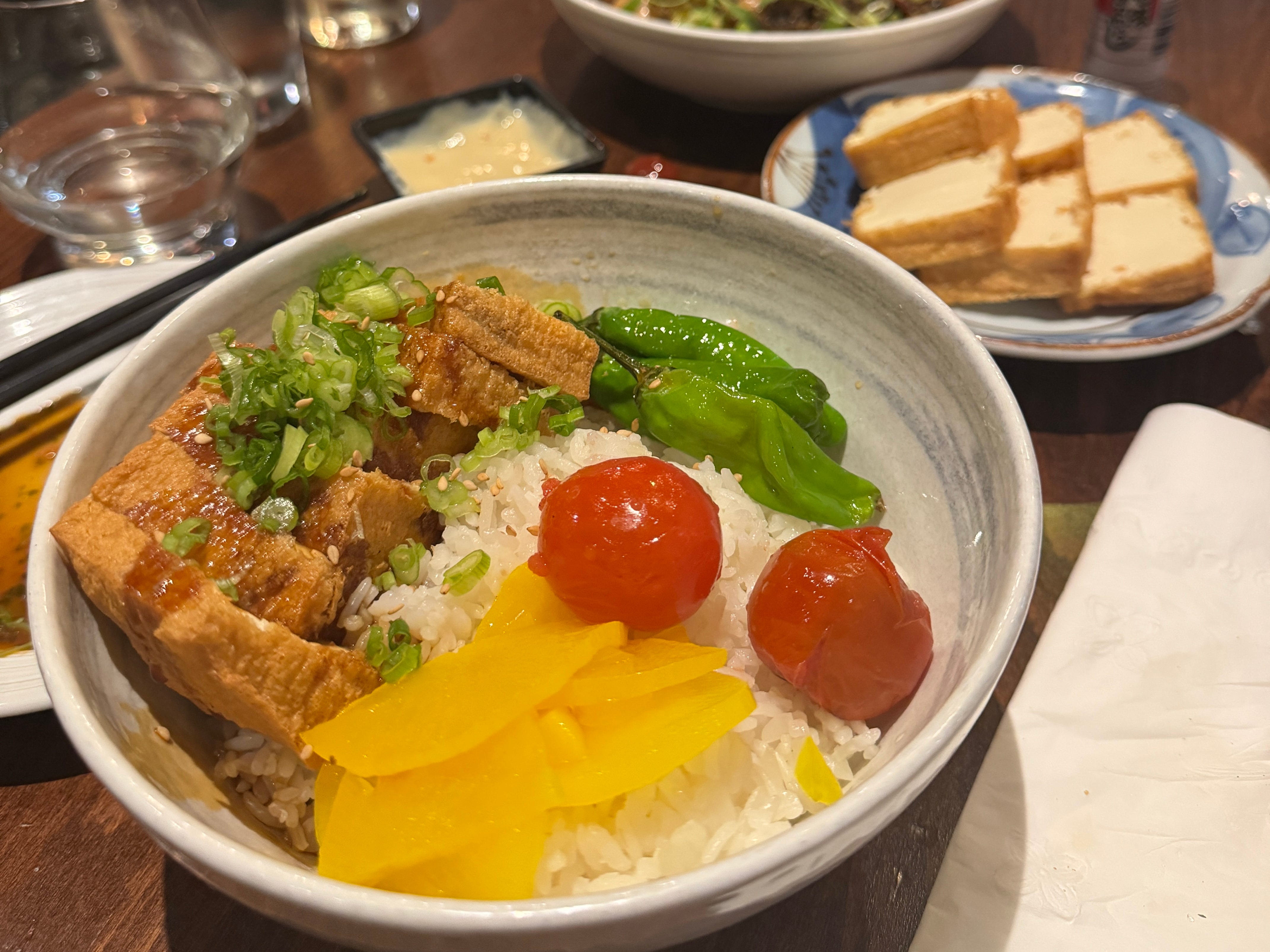
Somewhere between the bites, the Japanese beer for Mark, and the sake for me, one of us said it.
“Maybe our next big trip needs to be Japan.”
It didn’t feel like a joke. It felt instantly right. While we were waiting for our plates to arrive, we did a quick Google search, not expecting much. It was more of a “let’s see what’s out there” curiosity than anything serious. But then the search results loaded. Vegan food tours in Tokyo. Plant-based izakaya walks in Osaka. Kyoto tasting menus. Hands-on classes where you can learn to make tofu or hand-pull udon. We looked at each other like, Wait… why wouldn’t we book these?
And then of course, the following week, our social media feeds turned into a nonstop parade of “Japanese food tours you’ll love.” I rolled my eyes because yes, our phones are absolutely paying attention. But the more ads we saw, the more real the idea became. Japan wasn’t a someday fantasy anymore. It started to feel close, possible, maybe even inevitable.
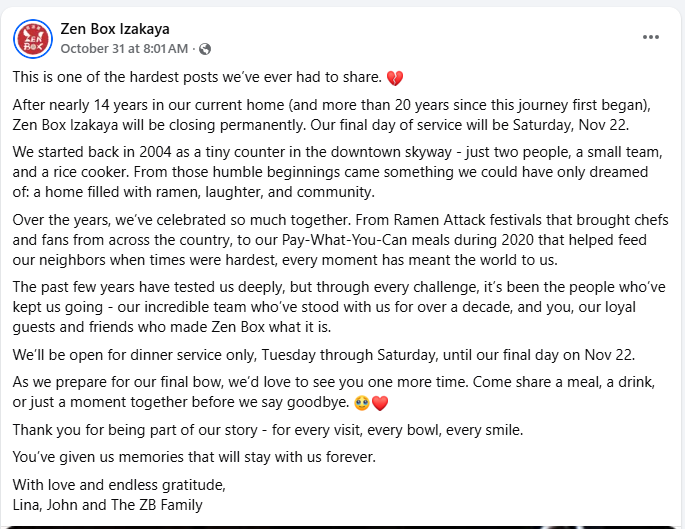
Then, in the middle of all that excitement, we learned that Zen Box Izakaya is closing after twenty years in downtown Minneapolis. We only ate there once, so it’s not like we had deep personal roots there, but the news hit harder than we expected. Their story echoed everything we’d been thinking about food and culture. They were part of a dining scene that shaped our city. They carried Japanese tradition forward through ramen, izakaya dishes, and a welcoming space that meant something to so many people. But the realities of the post-COVID downtown landscape, the construction, the reduced foot traffic, and the building’s foreclosure proved too heavy. Reading their goodbye letter felt like losing a piece of what made our city feel vibrant.
Zen Box even had their definition of “Izakaya” posted right inside the door. They explained that an Izakaya isn’t just a restaurant. The word breaks down to “to stay, to sit,” “sake,” and “shop,” but the meaning goes deeper.
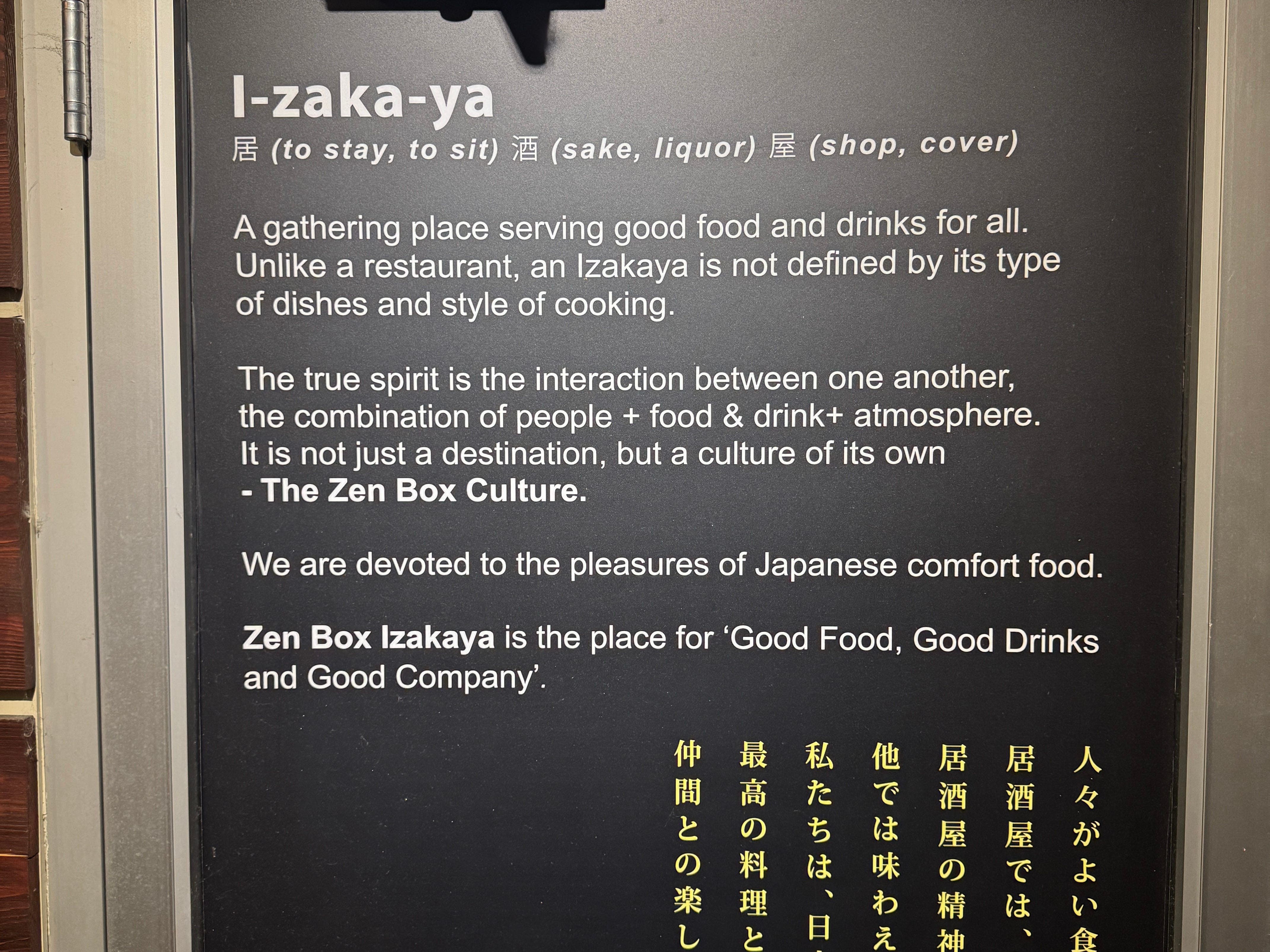
It’s a gathering place serving good food and drinks for all. A place where the spirit comes from people interacting, the mix of food and drink, the atmosphere, the comfort. It isn’t just a destination, but a culture of its own. A home for Japanese comfort food, good company, and connection. Reading that definition now, knowing they’re closing, adds a kind of weight to it. It reminds you how important food spaces really are.
And in a strange way, that loss made our dinner from a few weeks prior feel even more significant. That meal might end up being one of those small memories that leads to a bigger one. The moment we realized we want to experience Japan not just through photos or bucket list attractions, but through food. Real food. Honest food. The kind that tells you something about the people who made it and the culture that shaped it.
Travel isn’t just about the landscapes, the famous viewpoints, or the Instagrammable moments. Those things are great, but they’re surface-level. Sometimes the best way to understand a place is to eat your way through it. To taste what locals taste. To learn the craft behind the dishes. To see how flavor carries identity.
And maybe that’s the bigger message here. If there’s a cuisine you love, chase it. Follow it across a city, across a region, across the world.
If you love pasta, sure, take a class in Minneapolis, but imagine flying to Rome and learning from someone whose grandmother taught them.
If you love pastries, picture a workshop in Paris at dawn with the smell of butter in the air.
If you love spice, explore Bangkok with a street food guide who knows every hidden stall. Food is culture. Food is history. Food is connection.
That dinner wasn’t just a meal. It was a nudge. A doorway. And now I can’t stop wondering what other trips might start the same way.
"When you’re not leaning on meat or dairy, you actually have to build flavor"
I loved everything about this piece, but that quote stood out. It seems a great parallel to the throughline of the whole story—when you limit your own possibilities, your future favorites pass you by, unnoticed. "What if" and "why not" are essential ingredients.
Japan is a bucket list trip, but I'll be hitting g the waygu beef 😀
And sushi. ALL THE SUSHI!!!!